Case study · Sail-training cruises in the Atlantic

Nerida — from nothing to 72 pages and a booking engine

Nerida runs sail-training cruises aboard Mangareva, in the Azores and the Canaries. A ten-day trip costing several thousand euros is not a one-click decision: visitors want to know who the crew are, what the boat is like, where they will actually set foot, what the price covers — and whether there is still a berth left on the departure they have in mind.

There was nothing to start from. No old site to rebuild, no content to salvage: the entire online presence had to be built, in French and in English, in three months.

Three months, from first conversation to launch.

Visit the live site(neridasails.com, new window)
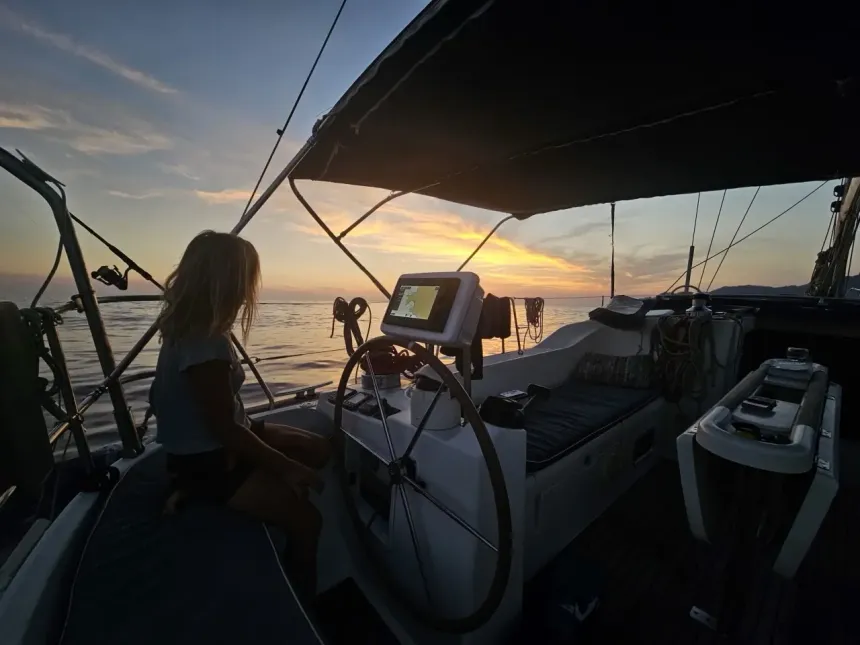
Sailboat cockpit at sunset on a calm sea — Nerida, Atlantic sail-training cruises

The starting point: a blank page

Starting from nothing has one advantage and one trap. The advantage: no inherited constraints, no redirects to manage, no mediocre content to keep "because it is already there". The trap: everything has to be decided at once, and a sales-driven site that picks the wrong architecture pays for it in search rankings for years.

So the structuring question was not "what should the site look like" but "what does a future sailor actually search for?". They do not search for "sail-training cruise": they search for an island, a destination, a format. The architecture was built on that answer.

The three decisions that shape the site

One page per island, not a single "destinations" page

The Azores and the Canaries are not two destinations but sixteen islands, and it is the island name people type. So each one has its own page — São Miguel, Pico, Lanzarote, El Hierro — rather than a paragraph buried in a shared page. That is what takes the site from a handful of pages to 36 per language: sixteen island pages, seven service pages, and the editorial core around them.

Remaining berths come from a database, not from a sentence

Departures, their dates, their price, the number of berths and the confirmed participants live in a database. The site reads it as the page renders: when a departure fills up, the page reflects it without anyone editing anything. That rules out the classic failure of a site advertising berths on a sold-out departure.

A long form, and deliberately so

The booking request collects identity, contact details, departure date, number of participants and sailing experience. That is a lot for a web form, and it is intentional: taking someone offshore for ten days means knowing who is coming aboard. In exchange, the site commits to a reply within 48 hours.

What the site does today

  • Seventy-two URLs in the sitemap: thirty-six pages in French and their thirty-six English counterparts, tied together by the matching hreflang tags.
  • Sixteen island pages — nine in the Azores, seven in the Canaries — plus the two archipelago pages and the destinations index.
  • Seven service pages, index included: sail training, offshore training, private charter, yacht delivery, buying advice, handover and coaching.
  • A booking flow backed by the departures database: dates, prices and remaining berths rendered from the data, and a structured seventeen-field request with explicit consent.
  • Organization and TouristTrip structured data: the cruises are described in the format Google expects for a trip, not as ordinary text.
  • The fundamentals held: one h1 per page, a skip link for keyboard navigation, alternative text on every image and lazy loading, a sitemap and a robots.txt served.

What that gives, measured

The figures below are neither targets nor estimates: they were recorded on the live site, under the conditions of a phone on an average network. You can check them yourself.

1.3 s

Largest Contentful Paint (LCP)

Google treats a site as fast below 2.5 s.

0

Cumulative Layout Shift (CLS)

Nothing moves while the page loads. The threshold above which Google penalises is 0.1.

445 KB

Page weight

Images included, for a page that also queries the departures database.

25

Network requests

Seventeen to the site itself, eight to the services it relies on: media storage, the database and the fonts.

Recorded on 17 September 2026 on neridasails.com/fr — mobile emulation, network capped at 1.6 Mbit/s with 150 ms latency, CPU slowed four times, median of three runs.

These measurements describe the site on the day they were taken. They move when the content moves: that is why the date sits next to them.

What Nerida reports

This paragraph reports what the client observes on their side; unlike the measurements above, we cannot verify it for them, and we would rather say so than dress it up as a figure.

Nerida reports a rising number of booking requests and an online presence that is taking hold. The clearest change is elsewhere: departures and passengers are no longer tracked by hand. They live in the database the site queries, which removes the gap between what the site announces and what the operation actually knows.

A project along these lines?

Tell us where you stand. We reply within two working days, and the first conversation costs nothing.